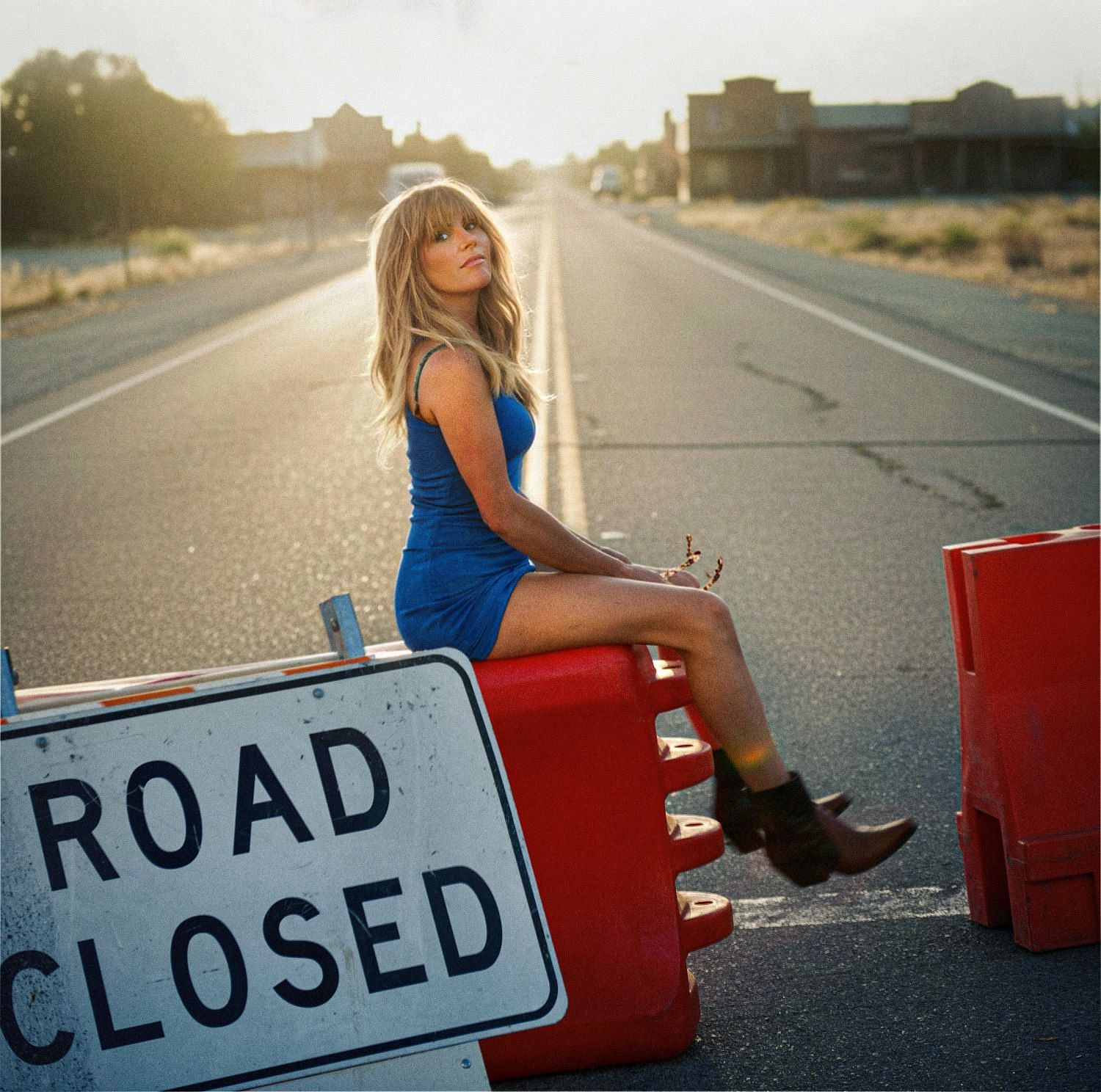
Grace Potter
Monday, 13 Jul
07:00 PM
$214.54
With her new album Trespasser, Grace Potter introduces a beautifully unruly cast of characters who step into forbidden spaces with absolute abandon. As the spiritual sequel to 2023’s Mother Road, the four-time Grammy nominee’s seventh studio LP continues the kaleidoscopic storyline drawn from bi-coasal life between Topanga Canyon, CA and the her family farm in her native Vermont (a road-trip journey she’s made eight times in the last five years, usually on her own). But while Mother Road was born from a desperate need for solace in the midst of emotional freefall, Trespasser reveals an artist firmly anchored in her singular vision. The latest chapter in a career marked by endless transformation and elite recognition—including sharing stages with rock & roll icons like the Rolling Stones & Robert Plant and earning praise from legends like Bob Dylan and Bonnie Raitt—Trespasser ultimately lights the way toward a more unbound and expansive means of moving through the world.
“I believe we need to challenge the way we’ve been told to navigate our lives, because so many of the boundaries we’ve set up aren’t working; we’re not living authentically,” says Potter. “I respect boundaries when they’re clear and meaningful, but when they feel arbitrary or put in place without question, I think we need to push against them. So many of those fences exist in our own minds—but when you step beyond them, it completely shifts your perspective. It can open everything up, like suddenly seeing the world in Technicolor.”
Arriving on the heels of 2025’s Medicine (a long-shelved album made with T Bone Burnett back in 2008), Trespasser emerged from an untethered process that Potter likens to piecing together an elaborate mosaic, beginning with two weeks of kinetic sessions after a 2025 tour with country superstar Chris Stapleton. “It was a strange vision quest for me because I’ve never worked this way before,” she says. “I typically prefer everything to be recorded quick and dirty–ensuring a cohesive sound—but this time, we broke the mold.” Produced by her husband and frequent collaborator Eric Valentine (Queens of the Stone Age, Weezer, Slash) and recorded in a cross-country journey beginning at her home in Topanga with Benmont Tench (Tom Petty & the Heartbreakers), continuing in Nashville with Mother Road session players Nick Bockrath (Cage the Elephant), Tim Deaux (Kings of Leon), and Matt Musty (Train), and completed in Vermont with members of her longtime live band (guitarists Indya Bratton and Ricky Dover Jr, bassist Kurtis Keber, drummer Jordan West), the album echoes its origins with a wayward sound that spans from stripped-bare soul to cosmic country to hellraising rock & roll—all while orbiting Potter’s force-of-nature voice and lavishly imagined storytelling. “So many of these lyrics came to life because of the tumultuous times we’re living through,” notes Potter, who plays Hammond B-3 Organ, guitar, piano, percussion, flute, Wurlitzer, and more on the album. “But as much as the world is destabilized, with this record I really felt myself honing in on my purpose and sense of worth, including my ability to convey human emotion in a very specific way.”
In a prime example of Trespasser’s unfettered humanity, the album’s hypnotic and sprawling title track finds Potter inhabiting the mindset of a man who wandered into her home one night in 2020. “We were sitting on the couch when someone in the middle of a mental health crisis walked into our house, thinking it was his,” she recalls. “He said that his wife had called him to dinner and how we must be the locusts that ate her—he was in a reign of terror in his mind, which was even scarier when we found out later that he had a knife on him. Of course it was really disconcerting, but instead of panicking we leaned in and tried to meet him where he was. It’s not that I have a blind faith in people, but I do think humanity breaks down when you choose fear over curiosity.”
Opening on the primal drumbeats and sultry guitar work of “Main Street U.S.A.” (a full-throated plea for the chaos and magic of true communal space), Trespasser instantly locks into an elemental momentum and soon builds to the magnificently shapeshifting “Love Me Not”: an acutely personal reflection on the damage done by a culture of all-too-convenient disconnection. “That song came from my heart getting broken by someone close to me who completely cut me off,” says Potter. “It was like a switch flipped and they became a totally different person, and all their fear and vitriol were aimed at me. It made me realize that in this reality-defiant world we’re living in, it’s so easy to lose touch with the ones we once knew intimately. That distance then creates chasms, and we form chambers of judgment—which are then reinforced by ChatGPT or whatever rabbit holes we fall into.” After beginning in a bruised but baiting, slow-burning fragility, “Love Me Not” morphs into a high-energy free-for-all after the first chorus, dancing through the emotional wreckage with a euphoric rush of radiant piano melodies and fantastically rowdy gang vocals. “I wanted to start from the point of view of someone who’s broken and hurting, to the point where the best thing they can think to say is ‘When I’m dead, I hope you’re sorry,’” Potter explains. “But then that simmering self-indulgence gives way and the real me comes out, trying to understand why I was let go.”
Illuminating Potter’s rare gift for alchemizing everyday experience into something cinematic and extraordinary, Trespasser later launches into the larger-than-life but deeply felt drama of “Run Baby Run.” With its fast-revving riffs and high-octane rhythms, the gutsy and glorious track hits like an adrenalized anthem of self-preservation. “That song came from a moment where I had to have a serious conversation, and my instinct was to run,” says Potter. “I was asking myself, ‘Why do I always want to run away when things get heavy?’, and it turned into a love song about a woman escaping an abusive relationship. At first the sound was full ’80s, like if Tina Turner had ZZ Top as her backing band, but we pulled it back until it landed in that sweet spot where it felt honest.”
On the album-closing “Belong,” Trespasser embodies a soul-baring intimacy, offering up an existential road song that trades in quiet revelation rather than resolution. With its softly glowing Wurlitzer melodies, wistful pedal-steel tones, and resplendent gospel harmonies, the aching but determined track unfolds as a meditation on forward motion. “It’s a song that’s been with me for a long time,” says Potter. “When I first wrote it, I imagined I’d eventually reach a place of belonging, but in actuality I’m still on the journey. At a certain point, it felt more authentic to share the middle of the road trip instead of waiting to arrive—because if I waited, no one would ever hear it.”
Although each song on Trespasser opens a window onto her inner landscape, Potter conceptualized the album as a dimension-hopping road saga, weaving together what she refers to as “these fables and storylines that have been whooshing around my soul for a very long time.” Part myth, part fever dream, the LP’s rotating cast of drifters circles around Topeka: a wild-hearted nomad who drives off a bridge in the breathless and scorching “Ride Or Die,” only to be resurrected within the spectral reverie of “Gasoline.” With its ensemble of misfits also including the lascivious ghost of a café delivery boy and the jealousy-crazed diner owner who killed him, Trespasser turns epic on “War On The Mountain”—a mythic psychodrama in which wholeness comes from making peace with all the selves you were told to exile. “From a young age, I made up characters to take me places I didn’t feel I had permission to go on my own,” Potter points out. “I invented all these otherworldly stories because it was easier than saying, ‘This is who I want to be and what I want to do.’ But now I realize I’m the permission slip I was always looking for.”
In the making of Trespasser, Potter found a defining touchstone in a seldom-sung verse from Woody Guthrie’s timeless folk hymn “This Land Is Your Land”: “There was a big high wall / That tried to stop me / The sign was painted / Said ‘Private Property’ / But on the backside / It didn’t say nothing / That side was made for you and me.” “Over the years I’ve gotten into so many arguments about what that verse means, but I’ve always believed it means that the side that says nothing is the side we’re supposed to go to,” she says. “We’ve always been taught that the trespassers are the bad guys, but to me it’s not about reckless rebellion—it’s about exploring, physically and mentally and emotionally, and being willing to step outside the narratives we’ve accepted. Because in my experience, the places we’re told not to go are exactly the ones that show us who we really are.”